What Should Brands Expect From a Period Underwear Manufacturer?
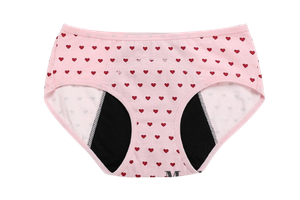
Brands should expect a period underwear supplier to manage much more than sewing. A qualified factory should control multilayer gusset construction, fabric GSM, absorbency, waterproof resistance, shrinkage, colorfastness, elastic recovery, fit, chemical compliance, labeling, and batch records. ISO 6330:2021 alone provides 35 washing procedures across three machine types and six drying procedures, showing why wash conditions must be defined rather than described as “machine washable.” For U.S. sales, FTC textile rules also require fiber content, origin, and responsible-company identification, with only a 3% manufacturing tolerance for most stated fiber percentages. Manufacturing agreements should turn every product claim into a measurable specification before bulk production starts.
Period underwear combines ordinary intimate-apparel construction with a fluid-management system. A common design may contain four functional areas: a skin-contact layer, transfer layer, absorbent layer, and leak-resistant membrane, followed by the outer body fabric. Adding or removing even one layer changes thickness, drying time, stretch, seam behavior, and liquid distribution. A period underwear manufacturer should therefore provide the composition, GSM, usable width, shrinkage target, stretch direction, and approved supplier reference for every material rather than giving the brand a generic description such as “absorbent fabric.”
Material data becomes more useful when it is connected to finished-product performance. A 220 GSM absorbent textile, for example, cannot be assumed to outperform a 180 GSM alternative simply because it weighs more. Fiber structure, surface treatment, layer area, compression, and liquid-transfer speed also affect performance. A brand ordering 5,000 units needs an approved material standard that purchasing, cutting, sewing, and inspection teams can all identify. Bulk fabric should be checked against the same specification used for the approved pre-production sample, including color, hand feel, weight, width, and functional-layer construction.
Absorbency claims should be written as numbers supported by a repeatable test method, not phrases such as “high absorbency” or “heavy flow.”
A supplier claiming 20 mL, 30 mL, or another capacity should explain how that number was produced. Test-liquid composition, application rate, sample orientation, conditioning time, pressure, and the definition of “capacity” can all change the result. A 30 mL laboratory saturation figure is not automatically equal to 30 mL of comfortable wearable capacity. Brands can request testing on at least 3 finished samples per size or production condition during development, then agree on a consistent bulk-test plan after the construction is approved.
Leak resistance needs a separate specification because liquid storage and liquid containment are different functions. A gusset can absorb well and still leak near seams or edges. AATCC TM127, listed by AATCC as a method for evaluating water resistance by hydrostatic pressure, offers one recognized route for evaluating relevant textile barriers. Factory development should also examine gusset width, front and rear coverage, needle holes, seam placement, membrane stretching, and edge construction. For overnight products, extending functional coverage 30–80 mm farther can change real-use protection more than adding another thin absorbent layer.
Wash durability should follow the same measurable approach. ISO 6330:2021 defines 16 washing procedures for Type A machines, 12 for Type B, 7 for Type C, plus six drying procedures. It also states that machine type, detergent, and drying conditions can affect results. Brands therefore need one agreed procedure for development and production testing. Testing a prototype after 1 wash says little about a reusable product expected to be worn repeatedly; evaluations at 5, 20, or 50 wash cycles give far more information about shrinkage, delamination, curling, membrane damage, absorbency retention, and elastic recovery.
Dimensional control follows naturally from laundering because a multilayer gusset contains materials that may shrink at different rates. AATCC TM135 covers dimensional change of fabrics after home laundering, while TM150 addresses garments. If an outer knit shrinks 3%, an absorbent layer 6%, and a laminated barrier 1%, the assembled area can pucker or distort even when each material looks acceptable before washing. Factory approval should therefore include both individual-material data and finished-garment measurements before and after the selected wash cycles, especially around gusset length, width, rise, leg openings, and waistband.
Fit then has to be checked as a functional property rather than only an aesthetic one. A brief that is 20 mm too loose around the leg may allow the gusset edge to move away from the body; a waistband with excessive tension can make the same style uncomfortable despite passing an absorbency test. Size grading should be reviewed across several points in the range instead of relying on one base size. For a seven-size collection, practical fit work might evaluate the base size plus 2–3 additional sizes before approval, while measurement inspection can cover every size produced.
| Production item | What the brand should receive | Example control point |
|---|---|---|
| Outer fabric | Composition, GSM, stretch, shrinkage | ± agreed GSM and width tolerance |
| Absorbent structure | Layer order and approved material code | 3+ development specimens |
| Barrier layer | Material specification and resistance test | Before and after washing |
| Finished garment | Measurement sheet and tolerances | Every produced size |
| Wash durability | Agreed wash/dry procedure | 5, 20, or 50-cycle checkpoints |
| Bulk quality | Inspection and lot records | Per purchase order and material lot |
Once specifications are fixed, sampling should move through controlled revisions. A first prototype answers whether the construction can be made; a fit sample checks measurements and shape; a size set checks grading; a pre-production sample confirms the materials, stitching, labels, artwork, and packaging intended for bulk production. A brand developing 4 styles in 5 colors already has 20 style-color combinations before sizes are counted, so uncontrolled sample revisions can create conflicting approvals. Each revision should carry a date or version number, with one signed or digitally approved pre-production reference used by production and QC.
Chemical and material documentation deserves equal attention because period underwear remains in prolonged skin contact. Brands selling into different markets should specify applicable restricted-substance requirements before ordering fabric. OEKO-TEX STANDARD 100, REACH requirements in Europe, retailer restricted-substance lists, and brand-specific PFAS policies may cover different substances or thresholds. Documentation should identify the tested material and supplier lot whenever possible. A report issued in 2024 for one laminated fabric should not automatically be treated as proof for a different 2026 material merely because both came from the same supplier.
U.S. labeling provides a useful example of why compliance information must reach the factory early. FTC guidance requires covered textile products to disclose fiber content, country of origin, and the manufacturer or another responsible company. For most textile fiber-content declarations, the FTC describes a 3% tolerance for unavoidable manufacturing variation; an intentionally added 3% fiber cannot simply be ignored. Care instructions are governed separately under 16 CFR Part 423, where a care label must remain attached and legible through the product’s useful life. Label artwork therefore belongs in pre-production approval, not at the end of packing.
Manufacturing cost should also be broken into its real components. One brief can require 5–8 textile or trim inputs when outer fabric, lining, absorbent materials, barrier film, waistband elastic, leg elastic, labels, and packaging are counted separately. A sewing factory may accept a 1,000-piece order while a custom fabric mill requires material equivalent to several thousand garments. MOQ discussions should therefore separate garment MOQ, fabric MOQ, custom-color MOQ, elastic MOQ, and packaging MOQ. Brands comparing quotations should request the same specification from every supplier; removing one functional layer can lower price without producing an equivalent product.
Production timing becomes easier to manage once those material minimums are visible. A quoted 30-day sewing period does not include much if fabric knitting, dyeing, lamination, testing, or custom elastic has not started. A usable schedule separates material production, lab-dip approval, pre-production sampling, cutting, assembly, inspection, packing, and dispatch. If one custom component requires 25 days and sewing requires another 20 days, promising a 30-day total without stocked materials leaves little room for approval or rework. Brands should ask which stages run at the same time and which must finish before the next begins.
Quality control should continue during production rather than relying on one final check. Incoming inspection can compare fabric width, weight, shade, defects, and material identification; cutting inspection can check orientation and panel accuracy; line inspection can review gusset position, stitch quality, elastic tension, labels, and measurements. Final inspection then checks packed goods against the approved sample and purchase order. For a 10,000-piece order, finding the same construction error after all 10,000 units are finished creates a very different repair problem from finding it during the first few hundred units.
Traceability makes later investigation more manageable. Production records should connect the purchase order with fabric lots, membrane lots, cutting batches, sewing dates, inspection records, and carton numbers. If complaints appear in 2% of units from one shipment, a brand should be able to determine whether the affected pieces share one material lot or production period rather than treating every shipment as identical. Lot identification becomes more useful as volume increases because a brand producing 50,000 units annually has far more material and production variation to manage than a brand ordering a single 1,000-piece run.
A factory should be able to show how an approved specification becomes a repeated production result: material identification, sample approval, controlled sewing instructions, measurable testing, inspection records, and lot-level documentation.
Supplier evaluation is stronger when questions require records rather than yes-or-no answers. Ask for an example material specification, an anonymized inspection report, the wash procedure used for reusable underwear, how many finished samples are tested during development, how failed goods are handled, and how revised tech packs are distributed. Ask whether functional layers can be substituted without written approval and whether subcontracted processes are recorded. In 2026, a professional supplier should be comfortable discussing document control, material testing, regulatory labeling, and repeatability alongside price, MOQ, and lead time.
Commercial performance also depends on consistency after the first order. A sample room can make 10 excellent prototypes with close supervision; producing 20,000 units across multiple lines requires documented tolerances and the same approved components. Brands planning repeat orders should ask whether material codes remain stable, how dye-lot variation is managed, whether extra production lines receive the same reference sample, and when the brand must approve a replacement component. The manufacturer should reproduce an agreed specification, not reinterpret it with each purchase order.